
😶🌫️ 🧠
Some work of mine
A glimpse into the way I tackle opportunities.
CarMax
The History
The first CarMax used-car store opened in September 1993 with the tag-line of, "The way car buying should be". Since then they have led the used car industry, innovating it in many ways. In 2014 CarMax took its first attempt at creating an e-commerce like experience on their .com platform, with the ambitions that customers would be able to select, review and finalize their purchase from home, before coming into the store. Being the product organization was immature at the time, the initial numbers were a little frightening so they turned the few store test off, thus killing their e-commerce aspirations.
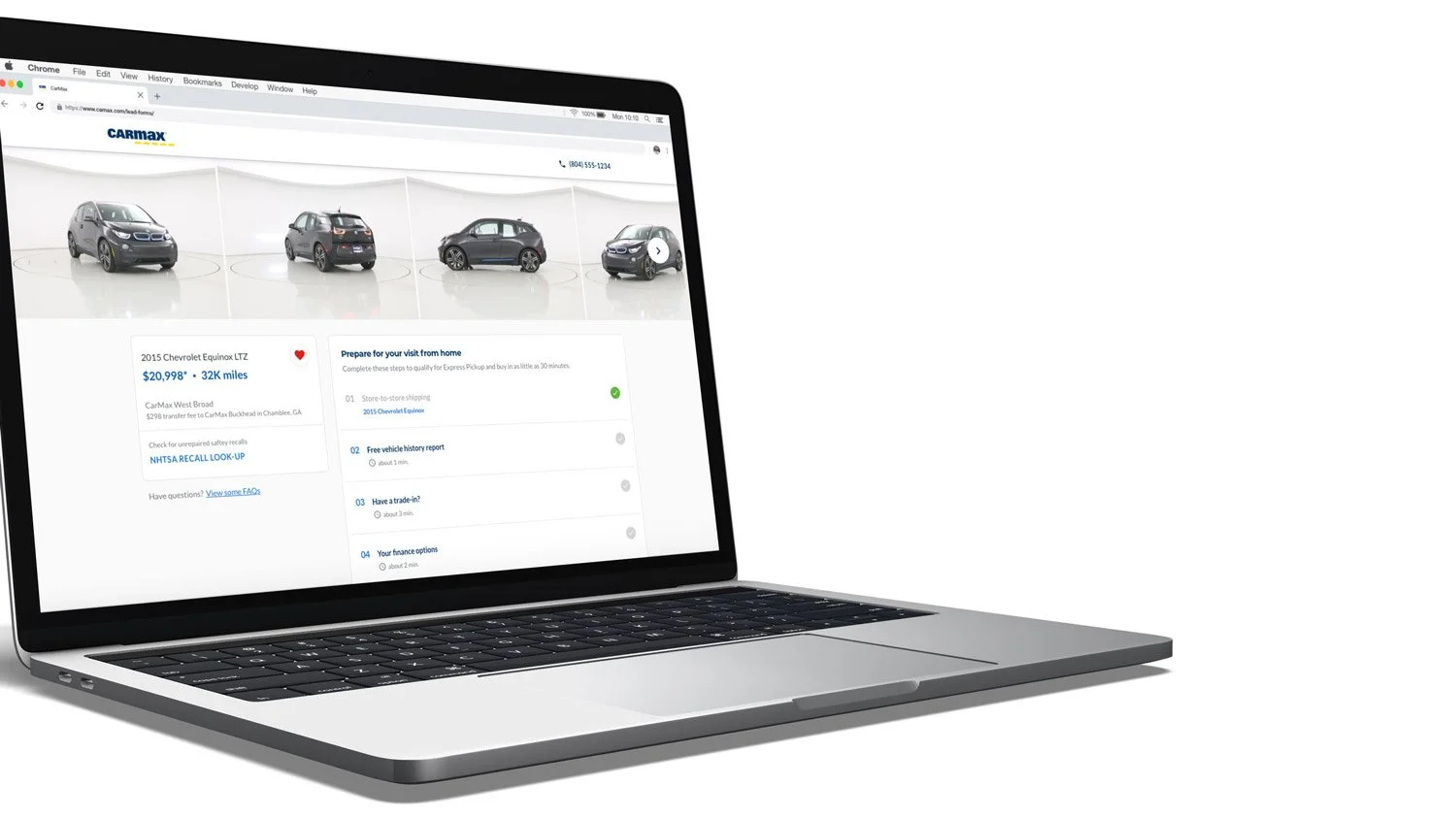
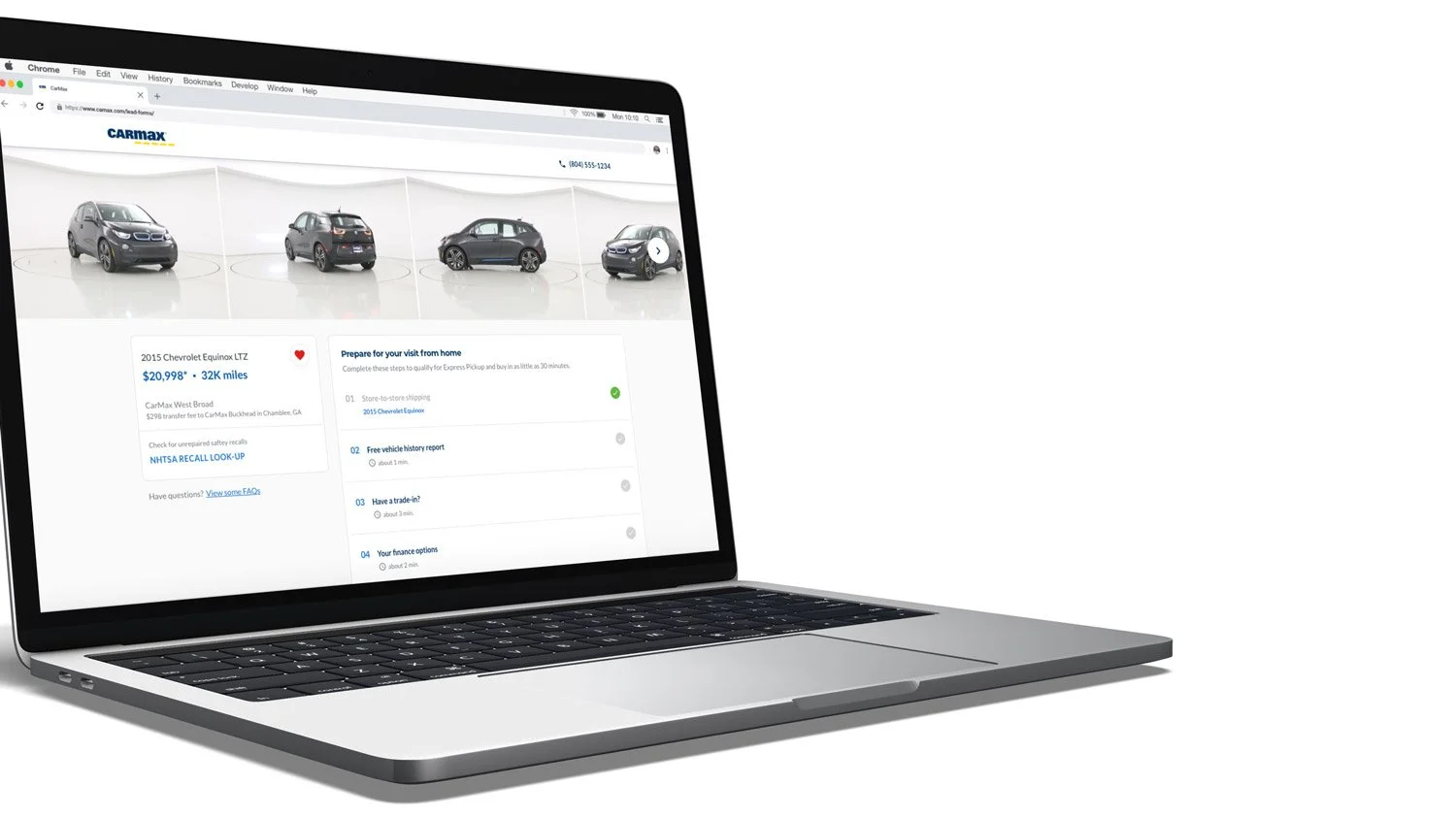
Being so quick to jump to conclusions and to learn from their failures meant it was business as usual. As you could imagine, the process of aligned and simplifying data structures from these legacy systems (early 2000's) and bringing in-store capabilities online across a company as big as CarMax is a long journey. Nothing we could just do all at once. So we have a rolling cycle of feature releases in which we are testing and analyzing all aspects of the business; how the needle is moving and why that is. Our first Self-Service Checkout release was quite small. Literally stitching together experience that already existed to make them feel as if they were one. Then, we slowly started to re-platform aspects of the buying process into our Self-Service Customer Checkout. As you can see from the flow above and the flow below, we a increasing the purchase process capabilities each sprint and quarter.
Discovery
n designing the Self-Service Checkout experience we really had to hone in on the type of customers that were searching for an alternative to the dealership. Throughout our research and audits of customers who have purchased with CarMax and competitors, we aligned on a design target that’s primary goal was to do as much of the buying process online as possible. This customer is confident in the vehicle choice and financial situation and have typically purchased a vehicle before. They're perception of of shopping online is defined by connivence and speed. Time is an invaluable currency for this type of customer. They could spend 10 hours at home and it still feels more convenient than 2 hours at a dealership and the most common quote we heard was, “I don’t feel like being at a car dealership all day, because that’s typically how long it takes...” and, “I don’t want to talk to anyone. I know what I want.”
A quick (and cliche) diagram to show the intersections of data and methodology we used in crafting our primary design-target, Derrick. This was a 3 month process that I led with the goal of unifying the Product Org around a primary customer, given out strategic goals.
Meet Derrick. He's our primary design target crafted by insights from qual, quant and marketing segment research. Derrick is a unified design target that will allow multiple product teams to focus on creating an integrated experience that delivers on our strategic commitment to sell a car fully online. For the last 1 and a half years, we've been talking to customers non-stop, hearing their stories and allowing them to help guide key design and priority decisions for the Checkout. This qualitative data was put against quantitate data we worked with the .com Analytics team to curate. We took a deep dive into the current Self-Service Checkout customers and broken them into segments. These segments were cut by customers who are currently hitting the online capability wall in the Self-Service Checkout experience. We then back tracked to see what their upper funnel shopping behavior was.
Derrick is our primary design target crafted by insights from qual, quant and marketing segment research. He is a unified design target that will allow multiple product teams to focus on creating an integrated experience that delivers on our strategic commitment to sell a car fully online.
Audit of the current .com experience that was the building blocks for several workshops in an effort to align and educate the product org by creating empathy outside of the individuals teams opportunity area.
There are several methodologies we use to conduct the research and techniques we use to synthesis the data. In this example; we conducted a remote moderated interview with a customer who recently purchased through Online Checkout, reviewed her in store records from Salesforce , listened to all of her phone call recordings from calls to the store, watched the screen recording of the CarMax Associates assisting her, and used Fullstory to view her online sessions. All of this to build a full picture of this customers experience.
We stay in a continuous discovery mode, testing design concepts with customers both moderated and unmoderated. For remote unmoderated tests, we would use tools like Usertesting.com and for remote moderated we would commonly use a tool called Ethn.io . This tool would allow us to pinpoint a specific page of CarMax.com which would trigger a survey. From this survey we would screen the customers and call them in real time to capture more accurate thoughts and feedback about their experience and expectations of shopping at CarMax. Having the full team involved in several discovery sessions each week utilizing different methodologies really helps the product teams become aligned around customer needs and gives us great material to relay to stakeholders about the decisions we’re making.
Buying used car is not the same a buying a shirt or pair of shoes online. The vehicle history, factory recalls, trade-ins, license plate registration, taxes and fees calculated on an individual basis, financing, required documents, driver's license scan, etc. This is some logic that powers just the trade-in estimate portion of Self-Service Checkout. Want to see the full resolution source file? View Overflow File
Want to see the full resolution source file? View Overflow File
Design & Delivery
Throughout the design process, I worked closely with our visual system design team to create components to add to our system and complete an overhaul of our system’s atomic elements like elevations, colors, typography buttons etc. This design collaboration would then extend to me leading a team of 6 designers into unifying the visual experience across the .com platform and store systems. This was because our customers would often do some online then complete the rest after their test-drive. The experience of picking up right where they left off online was very appealing to customers as it simplified their experience and cognitive load. Through this process we identified and created various patterns and UI to be shared across experience.
Specs sheet for development of the Finance Decision Card component that was consumed by the design system for consumption by other teams delivering finance decisions.
Small vehicle card, small appointment and status chip specs contributed to the CarMax design system.
Basic responsive grid and max-width layout templates for the Self-Service Checkout microsite.